Most household problems give us some sort of warning. A fire produces smoke. A leaking pipe leaves a puddle. A gas leak has a distinctive smell.
Carbon monoxide is different. You can’t see it. You can’t smell it. You can’t taste it.
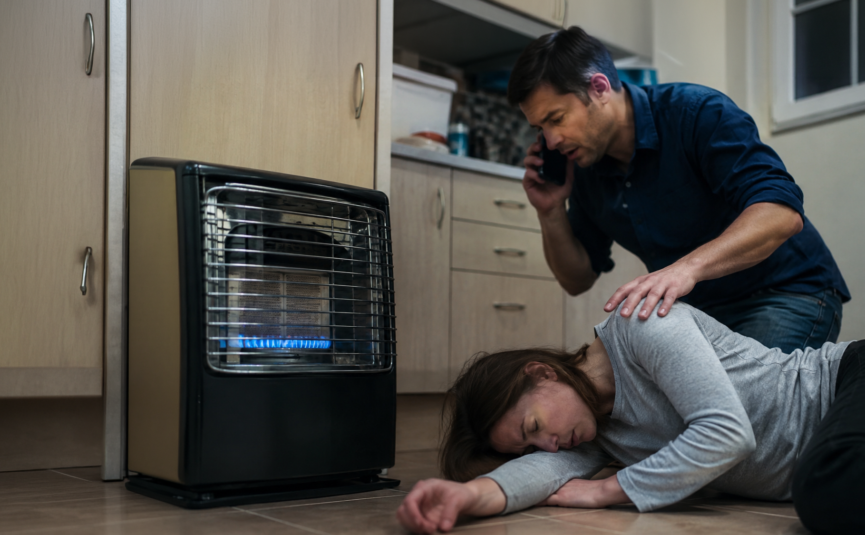
So, could it happen in your home? If you use a gas heater in winter, light the fireplace on cold evenings, have a wood heater, or park your car in an attached garage, it’s a question worth asking.
The good news is that understanding the risk is the first step towards protecting your home. Once you know where carbon monoxide comes from, the symptoms to look for and the simple precautions you can take, staying safe becomes much easier.
Carbon monoxide is created when fuels such as gas, wood, petrol or charcoal don’t burn completely. Around the home, that usually means it’s linked to fuel-burning appliances or equipment.
Common sources include:
Most of these are things many of us use every day without a second thought. A gas heater warming the house on a cold morning. A fireplace crackling away in the living room. A generator running during a power outage.
The risk isn’t the appliance itself. It comes when fuel doesn’t burn properly and carbon monoxide starts to build up — which can happen if an appliance is faulty, poorly maintained or used somewhere without enough ventilation.
One of the reasons carbon monoxide poisoning is so difficult to recognise is that the symptoms don’t seem alarming at first. It might start with a headache you can’t quite shake. Maybe you’re more tired than usual, a bit dizzy, or slightly nauseous — easy to put down to a busy week or coming down with a cold.
Common symptoms can include:
Picture a winter evening with the heater running. One family member mentions a headache. Someone else says they’re feeling a bit off. It seems like a cold, or tiredness, or simply a rough day.
That’s the detail worth remembering: if several people in the home develop similar symptoms at the same time, particularly while fuel-burning appliances are in use, it’s worth taking seriously.
If you suspect carbon monoxide exposure, or if a carbon monoxide alarm sounds, move everyone into fresh air immediately and call emergency services.
Reducing the risk doesn’t have to be complicated. A few simple habits go a long way:
Even with regular maintenance, no one can see, smell or taste carbon monoxide. That’s why many homeowners install a carbon monoxide alarm as an additional layer of protection.
Think of it this way: maintenance helps reduce the risk, while an alarm makes sure you’re told if a problem does occur. And when it comes to carbon monoxide, the sooner you know, the sooner you can act.
Have a question? Visit the Quell FAQ page for answers the most commonly asked questions.
Quell carbon monoxide alarms are stocked at major retailers right across Australia, including
You can pick one up next time you’re already out shopping.
You can also find your nearest retailer by visiting our Stockist page.
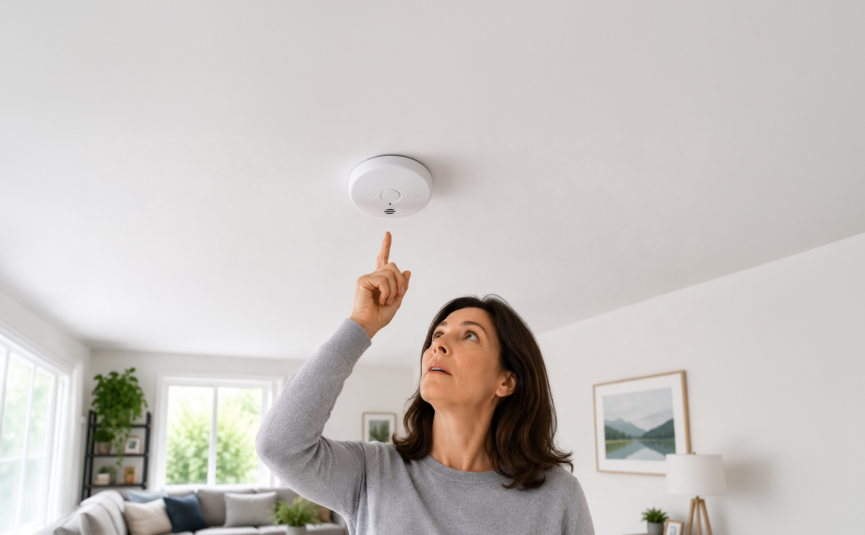
It’s often the middle of the night when it happens. The house is quiet, everyone’s asleep, and suddenly you hear an intermittent beep coming from somewhere overhead.
The good news? A beeping smoke alarm doesn’t usually mean there’s a fire. In most cases, it’s simply your alarm’s way of letting you know that something needs attention.
So, what is it trying to tell you?
Smoke alarms are designed to communicate different things.
A loud, continuous alarm usually means smoke has been detected and should never be ignored. An occasional chirp or beep, on the other hand, often indicates a maintenance issue, low battery, fault condition or end-of-life warning.
Think of it as your smoke alarm’s way of saying:
“Something isn’t quite right. Please check me.”
We get it. A smoke alarm that won’t stop beeping can be incredibly frustrating, especially when it starts in the middle of the night.
However tempting it might be, don’t remove the battery and forget about it.
Fix the cause, not the symptom. A few minutes spent finding the reason for the beeping can help ensure your home stays protected. Always follow the manufacturer’s instructions for your specific alarm model.
Before you do anything else, make sure there is no sign of smoke or fire and identify which alarm is beeping. Then work through the following common causes.
One of the most common causes of a beeping smoke alarm is a low battery.
If your alarm uses a replaceable battery, replacing it may resolve the issue. Even hard-wired alarms often contain a backup battery that need attention.
Photoelectric alarms work by aiming a light source (LED) through a sensing chamber to a receiver. When particles enter the chamber, changes to the light pattern are detected by the receiver, which in turn triggers an alarm.
Dust, dirt and even small insects can sometimes interfere with a smoke alarm’s sensors.
If the alarm hasn’t been cleaned for a while, a gentle clean according to the manufacturer’s instructions may help.
Smoke alarms don’t last forever.
Smoke alarms are designed to be replaced after 10 years. Some alarms will begin beeping to let you know replacement is due.
After a battery change, power interruption or test, some smoke alarms may need to be reset.
Always follow the manufacturer’s instructions for your specific alarm model.
Before replacing your smoke alarm, ask yourself:
These quick checks can often help identify what’s causing the beeping.
A smoke alarm is one of those devices you rarely think about until you need it. That’s why a little routine maintenance can go a long way towards helping ensure it’s ready to do its job when it matters most.
The good news is that smoke alarm maintenance doesn’t need to be complicated.
A few simple habits can help keep your alarm working as intended:
Think of it like servicing your car. A few minutes of maintenance now can help prevent problems later and provide confidence that your smoke alarm will respond when needed.
After all, a smoke alarm can only protect your family if it’s working properly.
If you’ve replaced the battery, cleaned the alarm and checked the manufacturer’s instructions but the beeping continues, it may be time for a replacement.
Like any safety device, smoke alarms have a limited lifespan. Replacing an ageing alarm is one of the simplest ways to maintain reliable home protection.
Have a question? Visit the Quell FAQ page for answers the most commonly asked questions.
Quell smoke alarms are stocked at major retailers right across Australia, including
You can pick one up next time you’re already out shopping.
You can also find your nearest retailer by visiting our Stockist page.
Most people assume that if a smoke alarm sounds, everyone in the house will hear it. Unfortunately, that’s not always the case.
If a fire starts in the garage while your family is asleep, the nearest smoke alarm will sound first. In a larger home, however, that warning may not be heard straight away, especially if bedrooms are located on another level or at the other end of the house.
That’s where interconnected smoke alarms can help.
When one alarm detects smoke, every connected alarm sounds, helping ensure everyone hears the warning no matter where they are in the home.
Every home has a different layout. While some homes make it easy to hear a smoke alarm from almost anywhere, others have bedrooms, living areas and garages spread further apart, making early warning even more important.
A quick self-check:
If any of these sound familiar, interconnected smoke alarms are worth considering.
There are two main ways smoke alarms can be interconnected: wireless and hard-wired.
Wireless interconnected alarms
Wireless alarms communicate using radio frequency (RF) technology. When one alarm detects smoke, it sends a signal to the other alarms in the home, causing them to activate as well.
Because they don’t require any wiring between alarms, they’re a popular choice for existing homes and come in both Battery and Mains Powered variants.
Good to know:
Hard-wired interconnected alarms
Hard-wired alarms are connected to the home’s electrical wiring and interconnected via a dedicated wire between each alarm, allowing all alarms to sound when one detects smoke. They’re commonly installed in new homes and major renovations, and installation must be completed by a licensed electrician.
If you’re upgrading the smoke alarms you already have, and they are Mains Powered you will need to replace your alarms with Main Powered alarms.
A wireless interconnected system is often the easiest place to start when creating a new interconnect network as there is no need to run cables through walls or ceilings, and you can easily expand the system later if your needs change. Adding an extra bedroom, converting the garage or creating a home office? Additional wireless alarms can simply be connected to the existing network, helping you extend protection as your home evolves.
If you’re building a new home or undertaking a major renovation, a complete hardwired or combination of hardwired and wireless may be suitable. With electrical work already being carried out, it’s a convenient time to install interconnected protection throughout the home. These systems connect to the home’s mains power and should be installed by a licensed electrician.
Do you need interconnected smoke alarms? If your home has areas where a smoke alarm might not be heard straight away, they’re certainly worth considering.
The whole point of a smoke alarm is to give you and your family time. Time to wake up, time to react and time to get out safely. The sooner you hear the warning, the sooner you can act.
Requirements can vary depending on where you live, so it’s always worth checking your local smoke alarm regulations when upgrading or installing new alarms. Interconnected smoke alarms are already required in some situations and are becoming increasingly common in homes across Australia.
In Queensland, all private homes, townhouses and units will need interconnected photoelectric smoke alarms from 1 January 2027. Requirements vary across Australia, so check the current rules in your state or territory.
Because when it comes to fire safety, a few extra seconds can make all the difference.
To learn more, explore Quell’s range of interconnected smoke alarms, browse the FAQs or visit the Video Library for practical advice on choosing, installing and maintaining your smoke alarms.
How many interconnected smoke alarms do I need?
The right number depends on the size and layout of your home. For the best level of protection, smoke alarms should be installed in bedrooms, hallways connecting sleeping areas and on every level of the home.
Can interconnected smoke alarms be installed in an existing home?
Yes. Many interconnected smoke alarms are available as wireless models, making them suitable for existing homes without the need to run cables through walls and ceilings.
What’s the difference between wireless and hard-wired interconnected alarms?
Wireless interconnected alarms communicate using radio frequency technology and don’t require wiring between alarms. Hard-wired alarms are connected through the home’s electrical wiring and are commonly installed in new homes and major renovations. Hard-wired systems should be installed by a licensed electrician.
Can I install wireless interconnected smoke alarms myself?
Many wireless interconnected smoke alarms are designed to be easy to install and don’t require wiring between alarms. Always follow the manufacturer’s instructions supplied with the alarm.
Can I add more alarms later?
If you’re using a wireless interconnected system, it’s often easy to expand the network later. This can be particularly useful if you renovate, add a bedroom or create a new living space and want to extend protection to additional areas of the home.
Are interconnected smoke alarms required in my state?
Smoke alarm requirements vary across Australia and can change over time. If you’re installing or upgrading smoke alarms, it’s worth checking the current requirements in your state or territory. Interconnected smoke alarms are already required in some situations and are becoming increasingly common in homes across Australia.
Quell offers both wireless and hard-wired interconnected smoke alarms to suit different homes and budgets. If you’re not sure which option is right for your home, the Quell range includes alarms suitable for both retrofits and new installations.
Carbon monoxide is often called the silent killer because it is a poisonous, colourless, odourless and tasteless gas. Most people don’t realise they are being exposed until symptoms begin—and early symptoms can easily be mistaken for a cold, flu or fatigue.
If your home has a gas heater, gas fireplace, wood heater, attached garage, or you use a petrol-powered generator, a carbon monoxide alarm provides an essential early warning when dangerous CO levels are detected
Carbon monoxide (CO) is a poisonous, colourless, odourless, and tasteless gas produced when fuels such as gas, wood, oil, petrol, or charcoal burn incompletely. It can be released by faulty or poorly maintained appliances, or when fuel-burning appliances are used in poorly ventilated or inappropriate spaces.
Common household sources of carbon monoxide include:
The symptoms of carbon monoxide poisoning are often mistaken for fatigue, stress, dehydration or a cold or flu.
Mild exposure
Moderate exposure
Severe exposure
A carbon monoxide alarm continuously monitors the air for the presence of carbon monoxide using an electrochemical sensor. If dangerous CO levels are detected over a period of time, the alarm sounds, providing an early warning so you can evacuate safely and seek assistance.
For the best protection, install carbon monoxide alarms:
Always treat a carbon monoxide alarm seriously. If the alarm activates:
Because carbon monoxide is invisible and odourless, you cannot tell when the danger has passed. The safest response is always to leave immediately.
A combination smoke and carbon monoxide (CO) alarm provides two essential forms of protection in one compact device.
A combination alarm is a convenient, cost-effective way to enhance your home’s fire and carbon monoxide safety.
Have a question? Visit the Quell FAQ page for answers the most commonly asked questions.
Quell carbon monoxide alarms are stocked at major retailers right across Australia, including
You can pick one up next time you’re already out shopping.
You can also find your nearest retailer by visiting our Stockist page.
When it comes to protecting your home and family, choosing the right smoke alarm is one of the most important safety decisions you can make. While all smoke alarms are designed to alert you to a fire, not all technologies perform the same.
Today, photoelectric smoke alarms are the preferred technology across Australia. In some states and territories, they are now the only type permitted for installation under legislation. Walk into Bunnings today and you’ll find almost every smoke alarm on the shelf is already photoelectric. So, the real question isn’t which technology to choose—it’s which photoelectric smoke alarm is right for your home.
This guide explains the different types of photoelectric smoke alarms available and how to choose the best option for your needs.
With so many options available, we’ve listed the benefits and features of different smoke alarms to help with your selection process.
9V Battery
A practical and affordable option for homes where mains-powered alarms aren’t required. Easy to install without wiring, 9V battery smoke alarms provide reliable early detection of slow-smouldering fires while allowing for quick battery replacement during routine maintenance. They’re ideal for existing homes, rental properties and replacing older smoke alarms.
10-year Sealed Lithium Battery
Designed for convenience, these alarms provide long-lasting protection without the need for annual battery replacement. With a sealed lithium battery that lasts the life of the alarm, they’re easy to install and require minimal maintenance while delivering reliable early warning of slow-smouldering fires. They’re an excellent choice for new and existing homes, as well as rental properties, helping you stay up to date with modern fire safety requirements.
240V Hard-wired
Installed by a licensed electrician, 240V mains-powered smoke alarms provide continuous protection with a backup battery to ensure they continue operating during a power outage. Ideal for new homes and major renovations, these alarms can also be interconnected so every alarm sounds if smoke is detected anywhere in the home.
Interconnected
Interconnected smoke alarms provide enhanced whole-home protection. When one alarm detects smoke, every interconnected alarm throughout the home sounds simultaneously. This ensures everyone in the home receives an early warning, regardless of where the fire starts, providing valuable extra time to evacuate safely. Interconnected smoke alarms are available in both wireless and mains-powered options, making them suitable for both existing homes and new builds.
From 1st January 2027, new legislation becomes law, requiring all existing private homes, townhouses and units in Queensland to be fitted with interconnected photoelectric smoke alarms.
Room-specific protection made simple
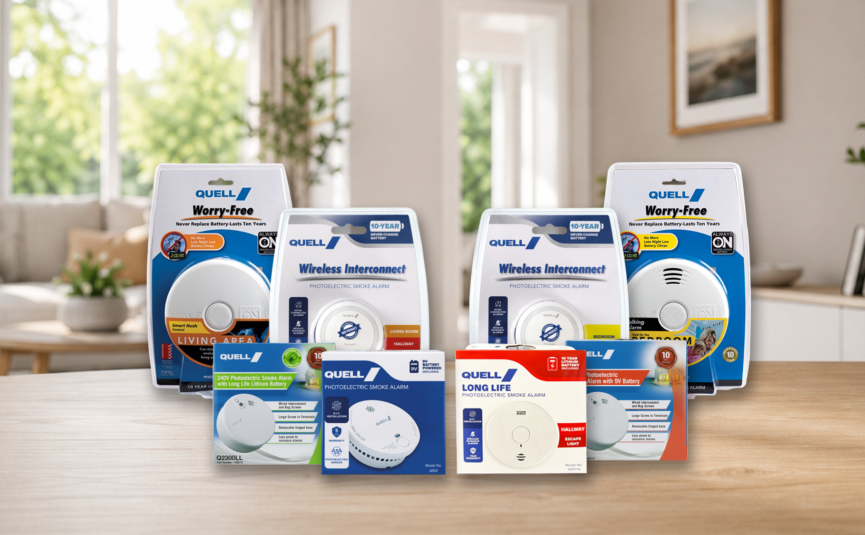
Once you’ve chosen the type of smoke alarm that’s right for your home, selecting the right model is easy. Quell’s room-specific packaging is clearly labelled for bedrooms, hallways, living areas and kitchens, making it easier to choose the most suitable smoke alarm for every area of your home.
When purchasing a smoke alarm, always check that it complies with Australian Standard AS 3786:2014 (or later). Smoke alarms sold through reputable Australian retailers will typically meet this standard, but it’s always worth checking the packaging—particularly when purchasing online.
Choosing the right alarm for each area of your home is easy with Quell’s room-specific packaging. Each Photoelectric Smoke and Carbon Monoxide (CO) Alarm is clearly labelled for its recommended location—such as bedrooms, hallways, living areas or kitchens—helping you quickly identify the most suitable product for every space. This simple, application-based packaging removes the guesswork out of home fire safety, making it easier to protect your family with the right alarm in the right place.
From 1st January 2027, Queensland will become the first Australian state to require interconnected photoelectric smoke alarms in all private homes, townhouses and units. Smoke alarms must be installed:
While legislation varies across Australia, these requirements provide an excellent benchmark for achieving the highest level of protection. For the best protection, Quell recommends:
Regular testing and maintenance help ensure your smoke alarm performs when you need it most. Follow these simple steps:
To watch our helpful maintenance videos and safety tips in the Quell Video Library.
Have a question? Visit the Quell FAQ page for answers the most commonly asked questions.
Quell smoke alarms are stocked at major retailers right across Australia, including
You can pick one up next time you’re already out shopping.
You can also find your nearest retailer by visiting our Stockist page.
Choosing the right smoke alarm depends on your home, local regulations, and the level of protection you want. Here are the main options to consider:
Replaceable Battery
A practical and affordable choice for homes where mains-powered alarms aren’t required. These alarms are easy to install yourself, with the replaceable battery needing replacement at least once a year.
10-year Sealed Lithium Battery
Designed for convenience and long-term reliability, these alarms feature a sealed lithium battery that lasts for the life of the alarm. They’re simple to install and require minimal maintenance, making them a popular choice for many homeowners.
240V Hard-wired
240V mains-powered smoke alarms provide continuous protection with a backup battery allowing them to operate even during a power outage. Installation must be carried out by a licensed electrician in accordance with Australian regulations.
Interconnected
When one alarm detects smoke, every interconnected smoke alarm throughout the home sounds simultaneously. Available in both wireless and mains-powered options, interconnected smoke alarms are suitable for both existing homes and new builds.
From 1st January 2027, new legislation becomes law, requiring all existing private homes, townhouses and units in Queensland to be fitted with interconnected photoelectric smoke alarms.
Room-specific protection made simple
Once you’ve chosen the type of smoke alarm that’s right for your home, selecting the right model is easy. Quell’s room-specific packaging is clearly labelled for bedrooms, hallways, living areas and kitchens, making it easier to choose the most suitable smoke alarm for every area of your home.
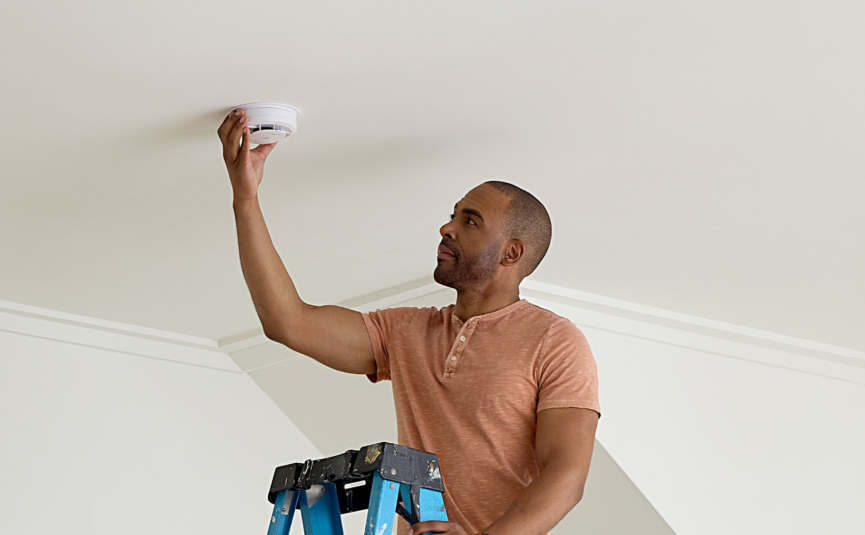
For a DIY installation, you’ll need:
If you’re replacing an existing alarm, check the manufacture date on the old unit. If it’s more than 10 years old, replacement is overdue regardless of whether it still appears to work.
From 1st January 2027, Queensland will become the first Australian state to require interconnected photoelectric smoke alarms in all private homes, townhouses and units. Smoke alarms must be installed:
While legislation varies across Australia, these requirements provide an excellent benchmark for achieving the highest level of protection. For the best protection, Quell recommends:
Step 1 – Choose the location of the smoke alarm using the placement guide provided.
Step 2 – Use the mounting base ring to mark the screw holes.
Step 3 – Drill the holes and insert wall plugs if required.
Step 4 – Screw the mounting bracket to the ceiling using the screws and plugs provided.
Step 5 – Insert replaceable battery or follow the activation instructions supplied on the 10-year sealed alarm mode
Step 6 – Twist clockwise or clip the alarm onto the mounting bracket until it locks into place.
Step 7 – Press and hold the test button. The alarm should sound within a few seconds. If it doesn’t, remove the unit and check the battery or activation procedure.
Connect up to 32 Quell Q5000 wireless interconnected smoke alarms to create a fully wireless linked network.
Step 1 – Unpack each wireless interconnected smoke alarm that you plan to install
Step 2 – Choose the location of the smoke alarm using the placement guidance provided.
Step 3 – Use the mounting base ring to mark the screw holes.
Step 4 – Drill the holes and insert wall plugs if required.
Step 5 – Screw the mounting bracket using the screws and plugs provided.
Step 6 – Turn on the interconnect feature of each wireless interconnected smoke alarms, turn each alarm over and slide the switch to LEARN mode
Step 7 – Press the button on the top of 1 alarm only. This alarm will become the HOST and will start to transmit a specific code to each of the other wireless interconnected smoke alarms. As these alarms receive the code, they will flash red.
Step 8 – Once all alarms are flashing red, the interconnect feature is complete.
Step 9 – It is important to remember which alarm is the HOST alarm. Mark it with a sticker or label on the back as a reminder.
Step 10 – Turn over each alarm and turn off LEARN mode.
Step 11 – Now, you’re ready to install each individual wireless interconnect smoke alarm. Place unit on the mounted base and twist clockwise until it clicks and is locked into place. Repeat for each individual alarm.
Visit the Quell Video Library for the full range of instructional videos on our range of photoelectric smoke alarms to ensure help is at hand, 24 hours a day.
Have a question? Visit the Quell FAQ page for answers the most commonly asked questions.
Quell smoke alarms are stocked at major retailers right across Australia, including
You can pick one up next time you’re already out shopping.
You can also find your nearest retailer by visiting our Stockist page.