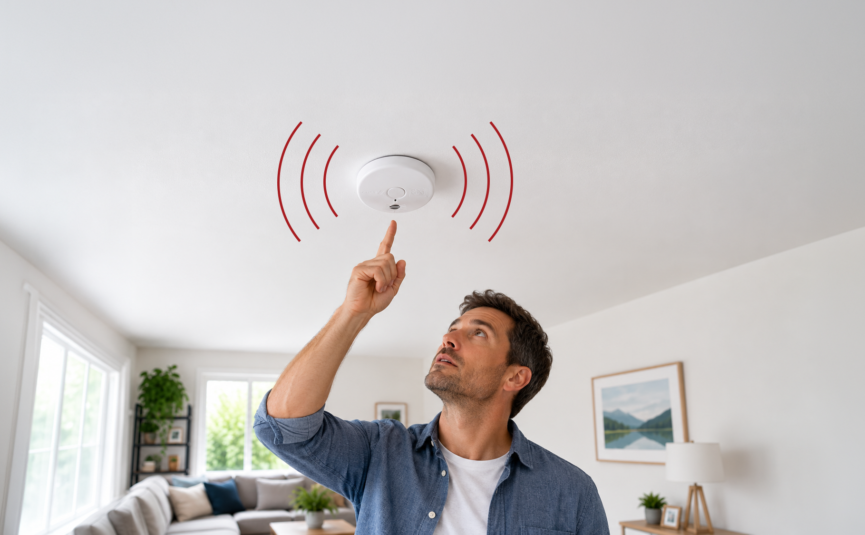
You’re cooking dinner. The toast is a little dark. Suddenly the smoke alarm is screaming and everyone’s waving tea towels at the ceiling.
A smoke alarm that goes off when there’s no fire is frustrating — but it’s doing exactly what it was built to do. The trick is working out what set it off, and stopping it happening again without switching off the protection you rely on.
This is different from the occasional chirp. A short chirp about once a minute usually signals a maintenance issue such as a low battery. A full alarm with no sign of fire may be a false alarm — and that’s what this guide covers.
The most common causes
Cooking: Smoke from burnt food, fumes from frying and steam from boiling pots are the number one trigger — especially if the alarm is mounted too close to the kitchen.
Steam: A hot shower, a clothes dryer or a kettle can all look like smoke to a photo electric sensor, particularly if the alarm sits inside or just outside a bathroom or laundry.
Aerosol sprays: Deodorant, hairspray, insect spray and cleaning products used near an alarm can set it off.
Dust and insects: Dust builds up inside the sensing chamber over time, and small insects can get in. Either can trigger the alarm.
Air conditioning and fans: Outlets and fans close to an alarm can push moisture or dust into the alarm.
How to silence it safely
First, make sure there is no fire. Only once you’re confident it’s a false alarm should you silence the alarm.
Many modern alarms have a hush button, often the same button used for testing. Pressing it reduces sensitivity for around ten minutes on most models while the air clears – check your alarm’s instructions. Dense smoke will still override it, so you stay protected.
If your alarms are interconnected, hush the unit that triggered – on many models it’s marked by a flashing light, and hushing it quiets the others; check your model’s instructions.
Then ventilate: open windows and switch on the rangehood or exhaust fan.
Never remove the battery or disconnect the alarm to stop it. A disabled alarm won’t work in a real fire.
Stopping it happening again
Check where it’s mounted. Alarms shouldn’t be in kitchens or bathrooms, or close to a cooktop, shower, clothes dryer or air conditioning outlet. Relocating it often solves recurring false alarms.
Use the range-hood before you start cooking and the bathroom fan before you shower.
Clean the alarm every six months by gently vacuuming around the vents. Never spray cleaning products or insecticide into the alarm.
Choose the right type of alarm. Photoelectric smoke alarms respond to visible particles of combustion and are less likely to be triggered by cooking fumes than older ionisation alarms. If you’re replacing an alarm that false-alarms regularly, a photoelectric model is the better choice.
If an alarm keeps going off and you can’t find a cause — no cooking, no steam, no sprays — take it seriously. Check for an overheating appliance or a fault in a power board. If in doubt, get everyone out and call 000.
For more help with specific alarm behaviour, visit the Quell troubleshooting page or browse the FAQs.
If it’s time to replace an alarm, the Quell smoke alarm range includes photoelectric models in replaceable battery, 10-year lithium and Mains Powered options. Quell products are available at:
Bunnings
Mitre 10
Other leading Australian retailers
You can also find your nearest retailer by visiting our Stockist page.
Most house fires start small. A pan left on the stove. A heater against the curtains. In the first few seconds, many can be stopped — if the right equipment is within reach and you know how to use it.
Two things are worth having in every Australian home: a fire blanket and a fire extinguisher.
Fire blankets: The Kitchen Essential
Cooking fires are the most common house fire in Australia, and the most dangerous mistake is throwing water on burning oil — it erupts and sprays burning oil across the kitchen.
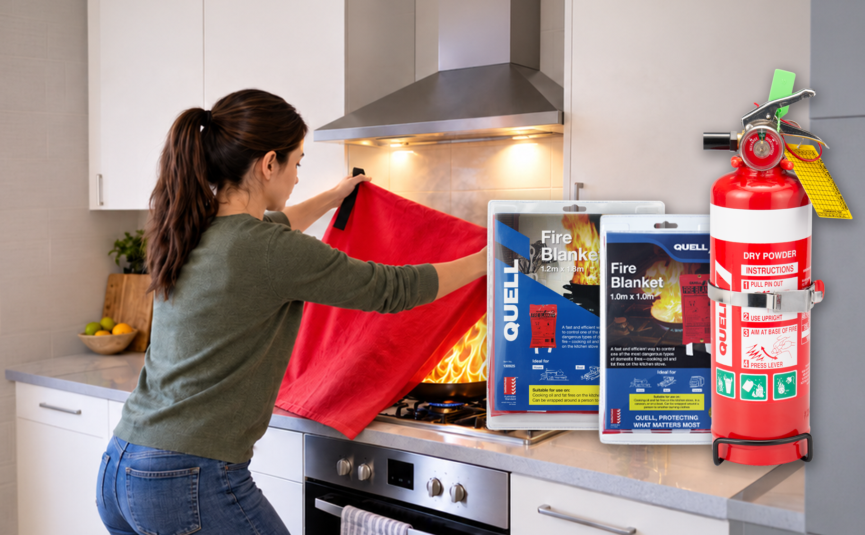
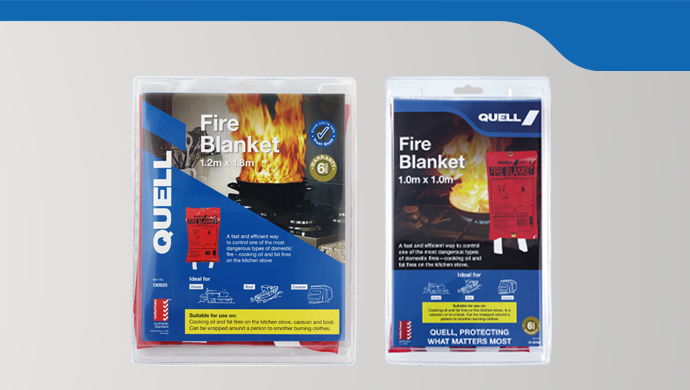
A fire blanket is the right response to a pan fire. It smothers the flames by cutting off oxygen, with no mess and no chemicals. Keep it in the kitchen but away from the stove — near the doorway, where you can reach it without leaning over the fire.
Pull the tabs at the bottom of the pouch to release the blanket.
Hold it in front of you with the edges rolled back over your hands to protect them.
Walk slowly towards the fire and lay the blanket over the pan. Don’t throw it — place it, keeping the edges clear of the flames.
Turn off the heat at the stove if it’s safe to do so.
Leave it in place until the pan has fully cooled — fire services advise at least 15 to 30 minutes. Lifting the blanket before the fuel source has cooled will let oxygen back in and reignite the fire
Call 000, even if the fire appears to be out.
A fire blanket is single-use — once it’s been on a fire, replace it. A larger fire blanket (1.2m x 1.8m) can also be wrapped around a person whose clothing has caught alight: get them to the ground and roll until the flames are out, then seek medical help.
To watch a full demonstration video on how to use a Quell Fire Blanket, go to the link below.
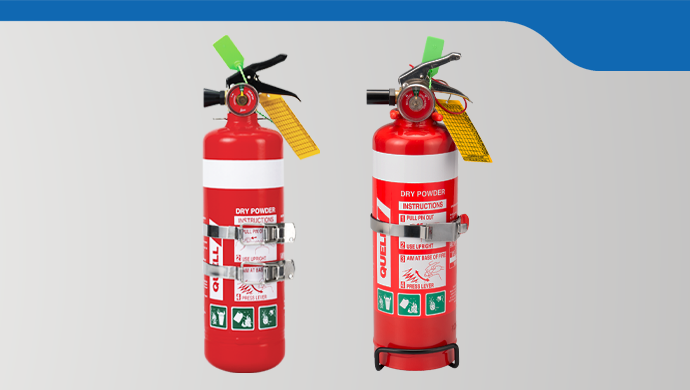
For fires outside the kitchen — a heater, a power board, a rubbish bin, a workshop — a dry chemical powder extinguisher is the practical choice for the home. In Australia these are the red extinguishers with a white band, labelled ABE, which means they are rated for ordinary combustibles (A), flammable liquids (B) and electrical fires (E).
Store it somewhere you’ll pass on your way out — the entrance to the kitchen or the hallway, not inside the kitchen. Check the pressure gauge is in the green now and then and give the cylinder a gentle shake to stop the powder settling.
An ABE extinguisher is not the tool for a cooktop oil fire — the discharge can splash burning oil, and the powder cloud reduces visibility. Blanket for the pan, extinguisher for most other small fires.
How to use a fire extinguisher: PASS
Pull the pin. This breaks the seal and lets you operate the extinguisher.
Aim the nozzle at the base of the fire, not at the flames.
Squeeze the handles to release the powder.
Sweep from side to side across the base of the fire until it’s out.
Keep your exit behind you. If the fire isn’t going out, stop and leave.
To watch a full demonstration video on how to use a Quell Fire Extinguisher, go to the link below.
These are for small fires in the first moments. If the fire is bigger than a small bin, if smoke is filling the room, or if you’re not confident — don’t fight it. Get everyone out, close the door behind you, and call 000.
Where to buy Quell
The Quell range includes fire blankets and ABE extinguishers sized for the home. Quell products are available at
Bunnings
Mitre 10
Other leading Australian retailers
You can also find your nearest retailer by visiting our Stockist page.
A caravan is a small space with lightweight fittings, gas appliances, a battery system and usually one door. If a fire starts, there’s less time and fewer ways out than in a house. That’s a reason to set up properly before you travel.
The Four Essentials
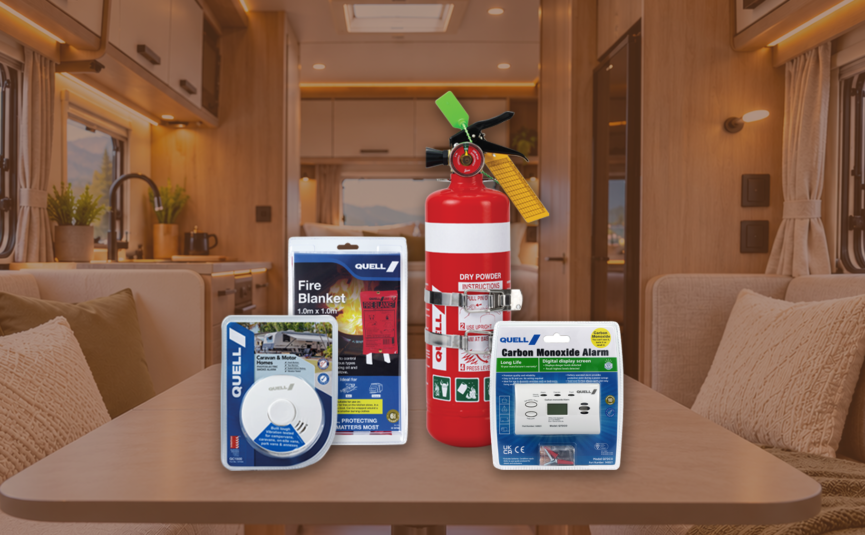
Fire and Rescue NSW recommends every caravan carry 4 things: a working smoke alarm, a carbon monoxide alarm, a dry chemical powder fire extinguisher, and a fire blanket — with the extinguisher and blanket located near the exit.
Smoke alarm. Fit a photoelectric alarm near the sleeping area — it responds well to smouldering fires in bedding and upholstery Choose one with a hush button, because in a caravan the alarm will be close to the cooktop.
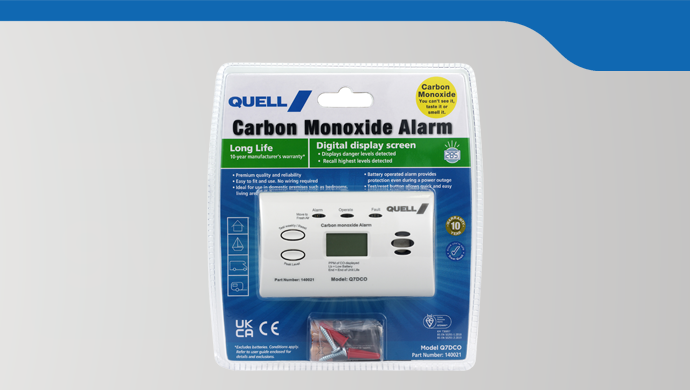
Carbon Monoxide Alarm. While a smoke alarm alerts you to a fire in your van, a Carbon Monoxide (CO) alarm detects the early presence of carbon monoxide emitted from gas sources such as heating and cooking systems, vehicle engines and fuels.
Fire extinguisher. An ABE dry chemical powder extinguisher, mounted near the door – compact 1kg and 2.5kg sizes suit most vans.
Fire blanket. Faster and cleaner than an extinguisher for a fat fire. Keep it near the exit, not next to the stove.
Queensland’s smoke alarm requirements for caravans
Queensland requires smoke alarms in caravans and motorhomes registered or transferred in Queensland since 1 July 2024 to have a compliant 10year sealed photoelectric smoke alarm fitted, and from 1 January 2027 the requirement extends to all registered caravans and motorhomes in the state. Other states have their own rules — check the requirements where your van is registered.
LPG is one of the most serious fire risks in a caravan. Before each trip:
Check that gas cylinders are secured correctly to the van, with valves facing away from it
Inspect all fittings and hoses for wear or leaks — they can work loose from vibration on rough roads
Turn off pilot lights and cylinder valves before towing, and turn cylinders off when not in use
Never use a gas cooker or heater while the van is moving
If you smell gas: turn off the cylinder valve, open doors and windows, and don’t operate any switches until the van has cleared.
Electrical
Electrical faults and damaged equipment are a significant fire risk in caravans. Have appliances checked by a licensed electrician, don’t daisy-chain power boards, and charge phones and power banks on a hard surface — never on the bed.
Before you sleep, before you drive
Two habits make the biggest difference:
Before bed: turn off appliances and heaters, check the escape route is clear, and know where the extinguisher is
Before driving: turn off gas, check fittings, and turn off non-essential electrics
If a fire starts
Get out, stay out, and call 000. Only use the extinguisher or blanket if the fire is very small and the exit is behind you. Once outside, stay away from the van and the gas cylinders.
In areas with limited mobile coverage, the Emergency+ app uses your phone’s GPS to give emergency services your location. A portable radio keeps you updated on fire restrictions.
Where to buy Quell
Quell smoke alarms suitable for caravans, along with fire blankets and compact ABE extinguishers, are stocked by major retailers.
Quell products are available at:
Bunnings
Mitre 10
Other leading Australian retailers
You can also find your nearest retailer by visiting our Stockist page.
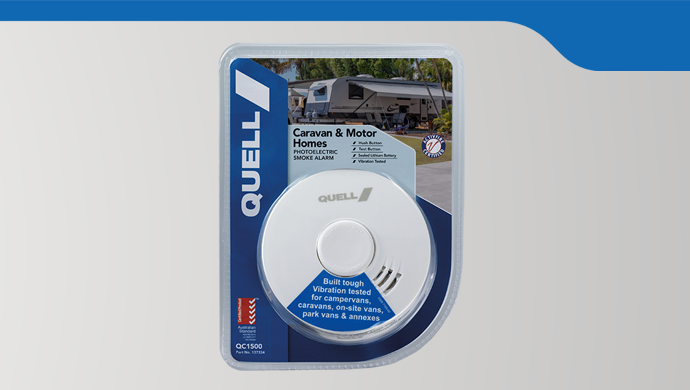
The Quell caravan and motor home alarm is built tough and vibration tested, designed specifically for camper-vans, caravans, onsite vans, park vans and annexes.
Carbon Monoxide (CO) alarm detects the early presence of carbon monoxide emitted from gas sources such as heating and cooking systems, vehicle engines and fuels