
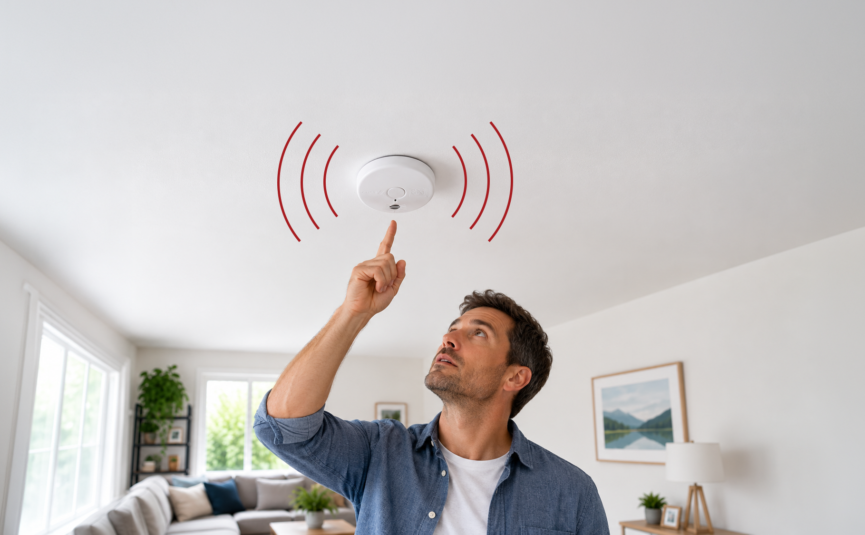
You’re cooking dinner. The toast is a little dark. Suddenly the smoke alarm is screaming and everyone’s waving tea towels at the ceiling.
A smoke alarm that goes off when there’s no fire is frustrating — but it’s doing exactly what it was built to do. The trick is working out what set it off, and stopping it happening again without switching off the protection you rely on.
This is different from the occasional chirp. A short chirp about once a minute usually signals a maintenance issue such as a low battery. A full alarm with no sign of fire may be a false alarm — and that’s what this guide covers.
The most common causes
Cooking: Smoke from burnt food, fumes from frying and steam from boiling pots are the number one trigger — especially if the alarm is mounted too close to the kitchen.
Steam: A hot shower, a clothes dryer or a kettle can all look like smoke to a photo electric sensor, particularly if the alarm sits inside or just outside a bathroom or laundry.
Aerosol sprays: Deodorant, hairspray, insect spray and cleaning products used near an alarm can set it off.
Dust and insects: Dust builds up inside the sensing chamber over time, and small insects can get in. Either can trigger the alarm.
Air conditioning and fans: Outlets and fans close to an alarm can push moisture or dust into the alarm.
How to silence it safely
First, make sure there is no fire. Only once you’re confident it’s a false alarm should you silence the alarm.
Many modern alarms have a hush button, often the same button used for testing. Pressing it reduces sensitivity for around ten minutes on most models while the air clears – check your alarm’s instructions. Dense smoke will still override it, so you stay protected.
If your alarms are interconnected, hush the unit that triggered – on many models it’s marked by a flashing light, and hushing it quiets the others; check your model’s instructions.
Then ventilate: open windows and switch on the rangehood or exhaust fan.
Never remove the battery or disconnect the alarm to stop it. A disabled alarm won’t work in a real fire.
Stopping it happening again
Check where it’s mounted. Alarms shouldn’t be in kitchens or bathrooms, or close to a cooktop, shower, clothes dryer or air conditioning outlet. Relocating it often solves recurring false alarms.
Use the range-hood before you start cooking and the bathroom fan before you shower.
Clean the alarm every six months by gently vacuuming around the vents. Never spray cleaning products or insecticide into the alarm.
Choose the right type of alarm. Photoelectric smoke alarms respond to visible particles of combustion and are less likely to be triggered by cooking fumes than older ionisation alarms. If you’re replacing an alarm that false-alarms regularly, a photoelectric model is the better choice.
When it’s not a false alarm
If an alarm keeps going off and you can’t find a cause — no cooking, no steam, no sprays — take it seriously. Check for an overheating appliance or a fault in a power board. If in doubt, get everyone out and call 000.
For more help with specific alarm behaviour, visit the Quell troubleshooting page or browse the FAQs.
Where to buy Quell
If it’s time to replace an alarm, the Quell smoke alarm range includes photoelectric models in replaceable battery, 10-year lithium and Mains Powered options. Quell products are available at:
- Bunnings
- Mitre 10
- Other leading Australian retailers
You can also find your nearest retailer by visiting our Stockist page.